Services
BRL Laser Damage provides a range of precision testing and characterisation services to ensure optical components perform reliably in demanding high-power laser applications.

Laser Damage Testing
-
 LIDT (Laser-Induced Damage Threshold) Testing
Sometimes referred to as threshold tests, these are the definitive test for a sample. An LIDT (Laser Induced Damage Threshold) test gives the highest energy/power density value that your sample can withstand. The customer receives the test results in the format of a full damage report summarising the numerical details on the first page.
LIDT tests are described here on our FAQs page. This description applies to both Pulsed tests and CW tests. CW tests are more difficult to perform and take longer than Pulsed.
-
 PASS/FAIL Certification
A PASS/FAIL test gives a PASS/FAIL result for a customer-specified energy/power level. It is a simpler assessment, which does not reveal the damage threshold. The customer receives a single page certificate.
Both Pulsed and CW PASS/FAIL tests are described here on our FAQs page.
-
 Customer-Defined Laser Damage Tests
Please contact us to discuss your requirements. Other damage related tests are available:
- Laser Damage Longevity and Durability Tests
- All tests are available at a wide range of wavelengths, repetition rates, and pulse durations (fs, ns and CW).
- standard wavelengths run from 206 nm through to 2000 nm, including telecoms wavelengths (e.g. 1030 nmn O-band) – please speak to our team of scientists to discuss your requirements.
- Affordable Coating Chamber Mapping
- Smart methodology is used along with accurate, multiple laser-damage assessments to affordably map out all regions of your coating chamber.
Optical Absorption & Loss Measurements
-
Photothermal Common-path Interferometry (PCI)
The PCI technique allows for spatially resolved absorption of coatings and substrates to be assessed at the sub-ppm (part-per-million) level. This allows for assessment between the optical surfaces (front/back) and bulk (substrate), in addition to homogeneity raster scans over one optical surface. We can offer assessments at 1064 and 1550 nm, with other wavelengths available through our strategic partners at the Universities of Glasgow and Stanford. PCI measurements are generally recognised as the best proxy for CW LIDT performance and is especially useful where CW LIDT exceeds the available laser intensity available in test beds.
-
Automated Cavity-ringdown (CRD)
The CRD technique allows total optical losses to be measured through both highly reflective (HR) and anti-reflective (AR) mirrors and windows, with resolution to 5 ppm (parts-per-million).
Available wavelengths are 640, 1064 and 1550 nm with additional wavelengths (in the range 640-2000 nm) available through the purchase of additional reference cavity optics.
Optical Characterisation
-
Spectrophotometry
Measurement of spectral transmittance, reflectance, and absorbance characteristics for coatings, filters, lenses, and assemblies, supporting quality control and R&D. Transmission and reflection spectroscopy across a wide wavelength range. Transmission and reflection spectroscopy available across 185-5200 nm, alongside ellipsometry and FT-IR (2.5-25 µm).
-
 Surface Metrology
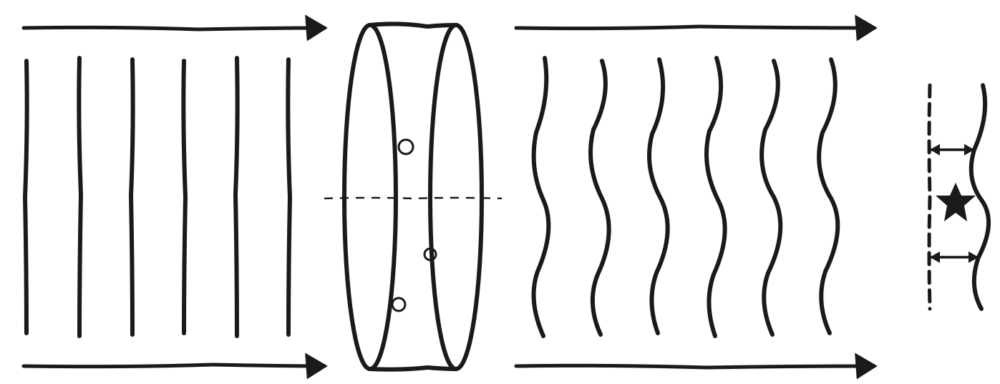
Extensive arrange of surface roughness, surface figure, and wavefront deformation measurements available using interferometry. Our team can support you validating optical components again the ISO 10110 standards, including surface form tolerances for optical elements (denoted as A/B(C) on drawings). These standards ensure optical components meet performance requirements, associated with form deviation.
Coating & Manufacturing Support
-
Coating Chamber Mapping
Laser damage mapping across coating chambers to optimise deposition uniformity. Additional support provided to identify mechanisms for failure and direct support for mitigation protocols that can be implemented within the R&D and/or production environments.
-
Optical Coatings by Ion Beam Deposition (IBD)
BRL Laser Damage Ltd is linked with the photonics manufacturing facilities at NMIS (National Manufacturing Institute Scotland) which includes low-loss optical coatings by IBD. Optical absorptions of candidate HR and AR materials are available with <0.5 ppm at 1064 nm, with optical substrates of any size up to 620 mm diameter and 200 kg. For more information please visit the Extreme Performance in Optical Coatings.